This piece was created by George Segal and remain in San Francisco, California. In 1982 Segal received a letter from Diane Feinstein, who was mayor of San Francisco at this time, and requested he build a memorial to represent Holocaust Victims. George stated that he did not want to make this, as he would be “steeped in death for months on end.” He did end up making this piece, but felt it took a toll on him emotionally. Decal worked on this for nearly three months nonstop and after it was revealed it won many prizes and awards.
Thursday, October 4, 2018
George Segal
George Segal is best known for his life-size plaster sculptures. He used a casting technique in which he wrapped a live model in strips of cheesecloth that were soaked in plaster, giving them minimal color and detail. I chose to look at his sculpture "The Commuters" which is located in the port authority bus terminal.
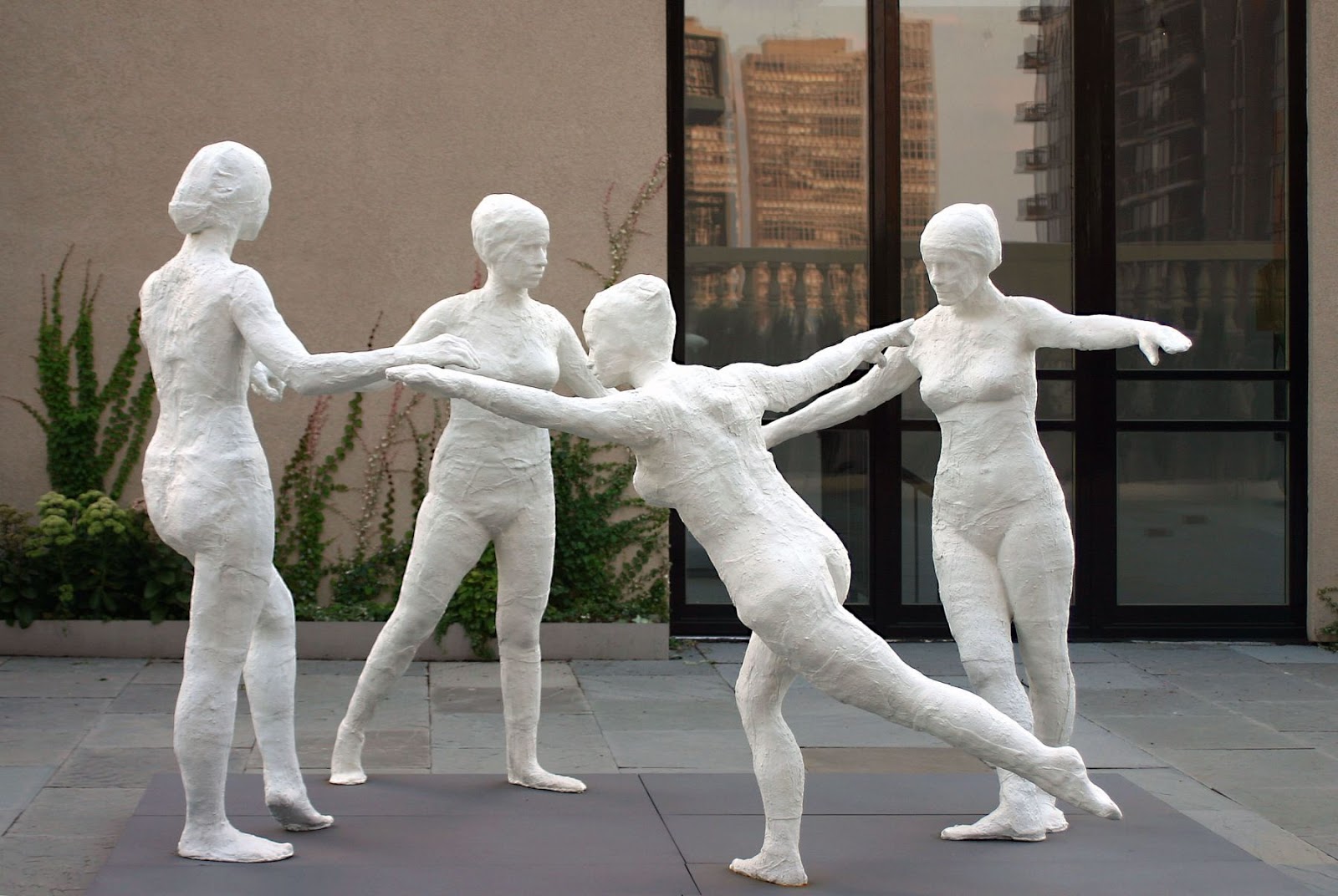
George Segal, The Dancers (1971)
I like this sculpture, because the women look realistic, like they were just covered in paint. No rods or extra support are visible. The dancers are very graceful looking. I like how they look human and Segal did not modify it to hide any physical flaws of the human body.
George Segal
George Segal is a sculptor and a painter from the pop art movement. He started his career as a painter but would later get into sculpting. Usually sculpting life size figures of people using plaster. HIs
statues usually do not have much detail. However, they are life size and do have the shape of a person. In 1999 he was awarded the United States National Medal of Arts, just one year before his death.
George Segal
George Segal was an American sculptor, photographer, and painter known for his works of making life like statues doing various everyday tasks. For his sculptors, Segal used orthopedic bandages dipped in plaster and then applied them to models. Some posed on a street corner, sitting at a diner, some resembling family and friends, and some waiting in a train station. They are three dimensional artworks that evoke everyday spaces and activities. In one of his works, The Diner you can see a realistic counter top where a life like man sits. Behind the counter another person is working. You can also see realistic objects such as coffee cups, sugar, and napkins. This is a life sized depiction of something that can happen in everyday life.
George Segal
I chose the "Holocaust Memorial" by George Segal because how powerful the message of the sculpture portrays. It almost made it seem like we are witnessing what was going on at the time. By the man standing at the fence with one hand on the barbwire, and all the others piled on the floor conveys almost a hopeless sensation, and that he has no where out. George Segals entered this sculpture made out of plaster from a competition he won in San Fransisco, where it remains today. However they transformed the plaster into bronze, painted over with white.
George Segal
George Segal was an American painter and sculptor. He is best known for his sculptures of life-size people. Segal used plaster bandages as his medium for his sculptures. His piece "Three Figures and Four Benches" was made in 1979. It is three sculptures of figures sitting on the bench like normal people. I picked this sculpture because I liked how it fit into everyday life. Especially in this picture how there are people sitting with the sculptures as if they were real people.
Subscribe to:
Posts (Atom)